
Listening to Our Members
In mid-January, we held two meetings with our department reps, caseworkers, and ARPS members to hear your views on what should be included in the University’s HSE Action Plan.
At our Academic Workloads meeting, we examined the University’s draft Workload principles and compared them with BUCU’s proposal which were tabled at the December meeting of the Academic Workload Working Group. The differences between the two approaches are stark. We disagree on fundamental issues regarding protections for new staff, overwork limits, how citizenship activities are defined, and the balance between strategic planning and academic autonomy. There was also disagreement on how to account for unplanned work and the need for consultation with staff on the points allocated for admin roles, as those tariffs have changed while the work of the roles have remained the same. Protected research time was also discussed. Because the University is a research institution, we argued that the University have agreed that research staff need to have protected research time in order for the University to achieve its ambitions. The University has agreed that academic staff on research and education contracts should have 30-40% protected research time across the University.
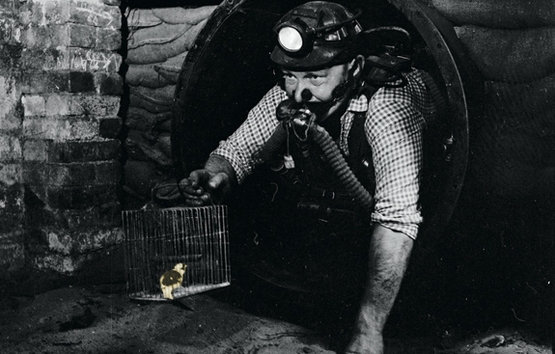
At the ARPS meeting, we launched a survey to gather specific concerns about their working conditions and the changes they want to see. (see here for the survey) The comparatively precarious working conditions of ARPS staff are critically important. At the UCU Congress of 2025, Vicky Blake characterised ARPS staff as the “canary in the coal mine” – the changes that ARPS staff face in higher and further education serve as an early warning for changes that will affect the wider workforce.
How We Responded to Your Feedback
Over the last couple weeks, BUCU and BUnison have been scrutinizing the University’s action plan. We only had three working days to see this before meeting with the University on the 22 January to provide our feedback. The plan is the University’s response to a serious enforcement notice from the HSE dated 11 December, which identified material breaches of the Management of Health and Safety at Work Regulations 1999. You can read our previous post about the HSE’s intervention here (link to blog post)
In its letter to the Vice-Chancellor, the HSE stated that to comply with the law, the University must take a number of significant steps. These include a review of management arrangements to capture the full extent of ill health caused by work-related stress, a review of the current organisational stress management policy to ensure that it is being implemented, and a review of the University’s organisational stress risk assessment.
The University has also been asked to develop risk assessments at college level and to set up an effective monitoring system to check that the arrangements it has in place to manage work-related stress are suitable. The HSE emphasised that all of these measures must involve consulting with staff and their union representatives.
The University has been asked to ensure that all of the actions specified in the inspection plan are completed by 30 September 2026.
Our Meetings with Management
We met with University management on 22 January and 27 January to discuss the draft action plan. The second meeting included our Regional Official, reflecting the importance of the HSE intervention for trade unions. We did secure three important commitments from the University. First, the University agreed to the inclusion of workload principles being elaborated jointly through the Academic Workload Working group mechanism, including 30 to 40% protected research time for academic staff. Second, the University also agreed that union representatives should not suffer detriment for taking on union work. Third, the University agreed to consider an annual joint meeting of the University Health and Safety Executive Committee (UHSEC) and the Joint Safety Advisory Committee (JSAC) to ensure communication and good relations between management and the trade unions. These are positive steps but they don’t address fundamental problems with the action plan.
Serious Concerns that we shared with the University
Fragmented and Reactive
Principal among these concerns is that actions as presented are isolated and fragmented rather than strategic, with a lack of overall steerage of the multiple moving parts. Overall, the action points take a reactive rather than a preventative approach to stress. It focuses on managing stress after it occurs rather than preventing it in the first place. Most troubling of all, the plan does not define what success looks like. Without clear success criteria, there is a risk that an opportunity to move the dial on a culture of health, safety and wellbeing will be wasted.
Root Cause Isn’t Being Addressed
The draft plan fails to address excessive workload as the root cause of work-related stress. You cannot solve a problem if you won’t name and address the primary cause. However, as mentioned above, the University has agreed to include jointly agreed workload principles for academic staff in the action plan (which has not yet been shared with the unions).
Union Consultation is Inadequate
Despite the HSE’s requirement for meaningful consultation with trade unions, the plan falls short. Trade unions excluded from decision-making body (UHSEC), causing communication and consultation failures in the H&S system. JSAC, where the trade unions sit, and UHSEC have only a limited involvement in the HSE response. The plan fails to identify what meaningful consultation with trade union reps looks like, and it is unclear what “consultation” even means in this context. Our position is that the unions should be consulted on the key performance indicators (KPI) that will be used to measure success.
Structural & Governance Concerns
The plan gives significant responsibility to the Occupational Health Advisory Group (OHAG), yet OHAG is not a part of the formal decision-making structure for health and safety. The actions focus heavily on OHAG but this does not address the HSE requirement for consultation with a “wide and representative range of employees.” OHAG’s remit has been disability, not health and safety more broadly.
There is also a glaring lack of absence of senior leadership in this plan. Apart from the Provost’s name in the header, senior leaders are invisible. The plan focuses on local managers and individual staff, but it is unclear how this will drive the cultural and systemic change that is needed at senior levels. Improving health and safety arrangements is essential if the University genuinely wants to achieve its stated goal of becoming a global top 50 university. You cannot be a world-class institution if your staff are stressed, overworked and unwell.
Timeline and Monitoring problems
The dates for completing specific actions in the draft plan are vague. It is unclear when significant milestones will be reached, making it difficult to hold the University accountable or to know whether the plan is on track. Without clear deadlines and milestones, there is a risk that actions drift or get deprioritized when other pressures arise.
Opportunities for JSAC to monitor the ongoing implementation of the plan appear limited, despite JSAC being the formal body where safety reps participate in health and safety governance. This is concerning because effective monitoring is essential to ensure that plans translate into action and that problems are identified and addressed quickly.
Meanwhile, OHAG – which has greater oversight of the HSE action plan – only started meeting again this year. This group had been dormant for several years due to the absence of an academic chair. During 2023-2024 and 2024-2025, BUCUpressed continuously for this group to be revived to address staff wellbeing needs, so we are pleased that it has been reconvened. Some JSAC members also sit on OHAG, which provides some continuity. However, as noted above, OHAG’s focus is on disability and sickness and wellbeing, not safety more widely, and not all of the safety representatives sit on this group. We have requested that the safety officer be given a seat at this group, in addition to the current union seat. To us, this looks like a structural choice to limit union involvement rather than oversight.
What Happens Next
BUCU will continue to push the University to genuinely consult, negotiate and agree on key policies and practices with union representatives at each stage of this process. This is not just good practice: it is a legal requirement under the HSE’s notice.
The University has until September 2026 to complete the actions in its plan. We will be monitoring progress closely and keeping you informed each step of the way. If the University is serious about addressing work-related stress, then it needs to acknowledge the role of excessive workload, engage meaningfully with the unions, and demonstrate genuine senior leadership commitment. Without these elements, the action plan will fail to deliver the change that is needed.
If you have any concerns about workload or work-related stress in your department, please contact your BUCU rep or get in touch with us directly.
 Birmingham UCU
Leave a comment